A hidden leak doesn't always mean a ripped-up floor. Modern detection tools find the source first, before anyone decides where to dig. Acoustic listening, thermal imaging, and tracer gas each play a part. Together, they narrow a leak down to inches rather than an entire room.
What "Non-Invasive" Means in Practice
Non-invasive detection finds a leak without breaking into walls or floors to search for it. Engineers use specialist equipment instead of guesswork. For example, a listening device can trace a leak's path along a pipe run without a single test hole. This matters because unnecessary digging adds cost and disruption for no real benefit.
Acoustic Listening: Following the Sound
Water escaping under pressure makes a faint sound as it travels through a pipe. Specialist listening equipment can pick up that sound through walls, floors, and paving. The engineer moves a sensor along the suspected pipe route. Where the sound peaks, the leak is usually close by.
Similarly, this method works well on mains and supply pipes under pressure. It helps narrow a leak's rough location before any other test is used. Crucially, it causes no damage to decoration or flooring at any stage.
Thermal Imaging: Reading Temperature Differences
A thermal camera reads surface temperature rather than sound. Leaking water often changes the temperature of a wall or floor nearby. Cold water leaves a cool patch; warm water leaves a warm one. The camera shows this as a colour map, highlighting differences invisible to the eye.
However, thermal imaging works best alongside another method. A warm patch alone doesn't confirm water is the cause. Still, it's a fast, non-contact way to check a suspect area first.
Tracer-Gas Detection: Tracking Gas Through the Pipe
Tracer-gas detection passes a safe, non-toxic gas mixture through the empty pipe. The gas is lighter than air, so it rises through even tiny cracks. It escapes through the ground or wall directly above the leak.
Consequently, a handheld sensor detects the gas at the surface, pinpointing the leak within a small area. This method works particularly well for leaks under solid floors or concrete slabs. In particular, it's considered one of the more accurate detection methods available today.
When a Small Amount of Access Is Still Needed
Detection narrows a leak down to a small area rather than an entire room. Even so, some repairs still need a small access point to reach the pipe. The difference is scale: a small test hole instead of a whole floor lifted on a guess.
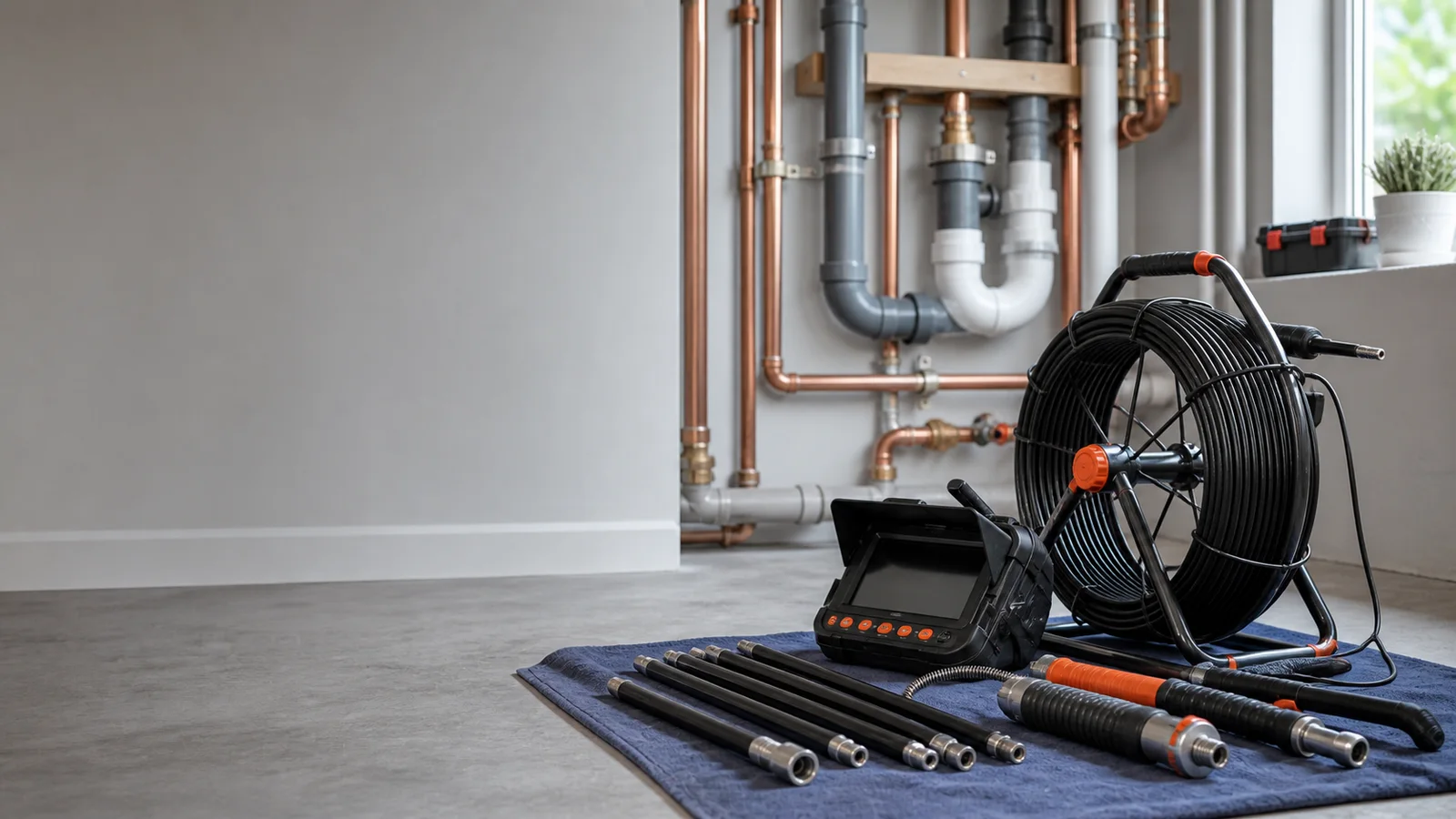
Meanwhile, where a leak sits within a drainage run rather than a supply pipe, a CCTV drain survey maps the pipe's condition from the inside. Combining detection methods with our leak detection & repair service, and CCTV drain surveys where drains are involved, gives an engineer the clearest picture before work begins.
Where to get help
Once the leak is located, no-dig options such as pipe relining service can avoid lifting floors, while a camera-led drainage investigation service checks the buried pipes. This service reaches Sunderland properties and South Shields properties.
Related reading
For anything outside leak detection itself, browse our full range of services to find the right fit for your situation.
Leak detection across our coverage area
- Leak detection & repair in Newcastle upon Tyne
- Leak detection & repair in Gateshead
- Leak detection & repair in Sunderland
- Leak detection & repair in South Shields
- Leak detection & repair in North Shields
- Leak detection & repair in Whitley Bay
- Leak detection & repair in Tynemouth
- Leak detection & repair in Cramlington
- Leak detection & repair in Hexham