Two Ways to Clear a Blocked Drain
A blocked drain usually has two classic fixes. You can push a rod through it, or blast it clear with water under high pressure.
Both work. But they don't do the same job. Picking the wrong one can cost you time, and sometimes money too.
This guide explains how each method works. It also covers when rodding is enough, and when jetting is worth the extra effort.
Both methods clear drainage pipes, not water supply pipes. If your problem is a burst pipe rather than a blocked drain, see what to do in the first five minutes after a pipe bursts instead.
How Drain Rodding Works
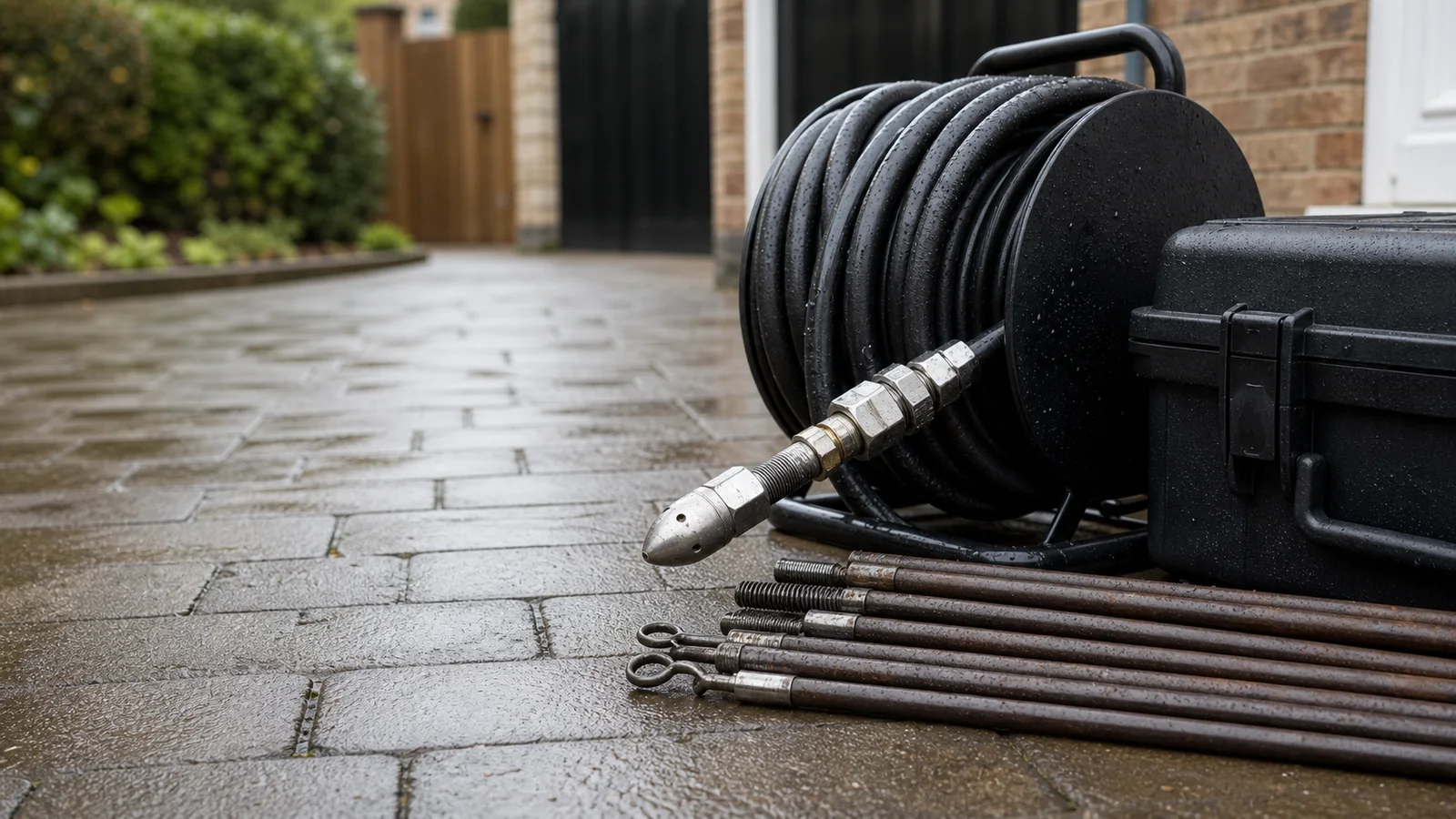
Drain rods are simple tools. They're lengths of flexible cane or plastic that screw together into a long pole.
An engineer feeds the rod down the pipe until it meets the blockage. Then they push, twist, and work the rod back and forth. Eventually, the blockage breaks up and water starts moving again.
It's a mechanical method. There's no water pressure involved, just physical force applied directly to the problem.
Rodding is quick to set up. It needs no power supply and no water tanker. For a simple, fresh blockage close to an access point, it can clear the problem in minutes.
But rodding has real limits. It only reaches so far down a pipe. It can push debris further along rather than removing it completely. And it doesn't touch the grease, scale, or grime coating the pipe walls.
How Drain Jetting Works
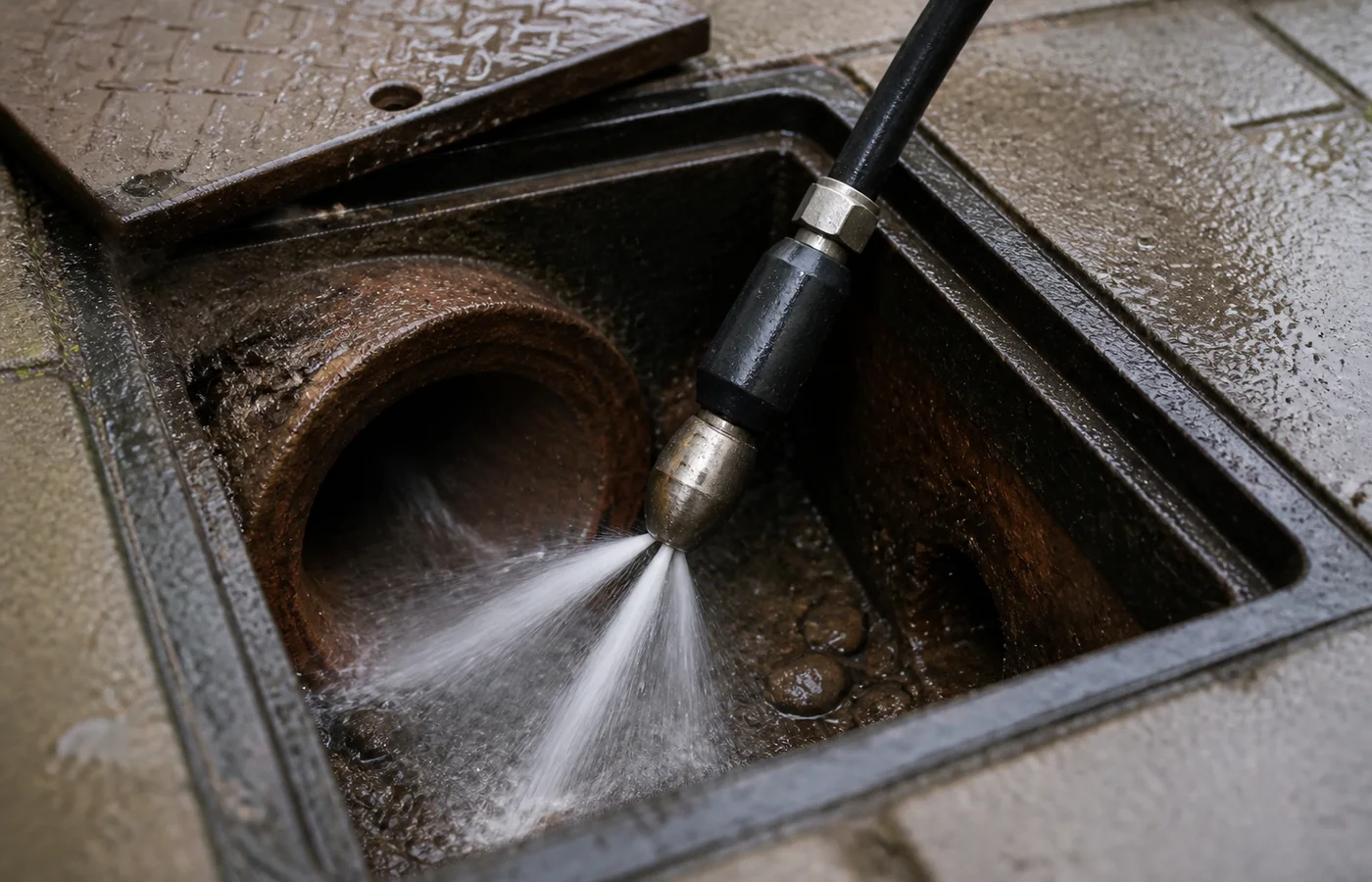
Drain jetting takes a different approach entirely. A machine pumps water through a hose at very high pressure, right down the drain.
The nozzle on the end has jets facing both forward and backward. The forward jets cut straight through the blockage. The backward jets pull the hose along and scour the pipe walls clean as it goes.
This means jetting doesn't just clear the blockage. It also washes away the grease, roots, and silt built up along the whole length of pipe.
It reaches much further than rods too. A jetting unit can clear pipe runs well over 100 metres. That matters on longer domestic runs, and it matters even more on commercial systems.
Clearing vs Cleaning: The Real Difference
Here's the point most people miss. Rodding clears a hole through the blockage. Jetting clears the whole pipe.
If a drain keeps blocking in the same spot, rodding only ever gives temporary relief. The grease or scale causing the problem stays exactly where it was. Jetting removes it properly, so the same blockage is far less likely to come back.
This matters most with fat, oil, and grease. A rod can punch a channel through a grease plug. Jetting strips the grease off the pipe wall instead. That's why kitchens and food businesses tend to need it more often.
Why Older Pipework Changes the Answer
Newcastle upon Tyne and Gateshead both have plenty of older housing stock. Tynemouth, Whitley Bay, and North Shields are much the same. Many properties still run on original clay drainage, sometimes decades old.
Clay pipes crack over time. Tree roots find their way in through the smallest gap and grow steadily inside the pipe. A rod can snag on rough or damaged clay. Jetting is generally gentler here, since it clears without dragging a rigid pole through a weakened section.
That doesn't mean rodding is unsafe on older pipes. It just means the choice matters more than it would on newer plastic pipework.
When Rodding Is the Right Call
Rodding still has its place. It suits:
- A single, fresh blockage close to an access point
- Loose debris rather than built-up grease or scale
- Situations where a quick, low-cost fix is genuinely enough
- Minor slow-draining sinks or toilets with no history of repeat problems
If that sounds like your situation, rodding may solve it there and then. There's no need to reach for a bigger tool than the job requires.
When Jetting Is the Better Choice
Jetting earns its keep on tougher jobs. Choose it for:
- Recurring blockages that keep coming back
- Fat, oil, and grease buildup in kitchen drains
- Tree root ingress into older pipework
- Long pipe runs beyond the reach of rods
- Commercial kitchens and busy properties with heavy drain use
- Preventative cleaning, to stop problems before they start
We see this pattern day to day across Newcastle upon Tyne, Gateshead, Sunderland and South Shields. It's just as common in North Shields, Whitley Bay, Tynemouth, Cramlington and Hexham. Older housing and longer pipe runs are common across all of these areas, and that's exactly where jetting tends to outperform rods.
Checking the Pipe Before You Commit
Sometimes a blockage keeps returning because the pipe itself is damaged, not just dirty. A cracked or collapsed section traps debris no matter how well you clear it.
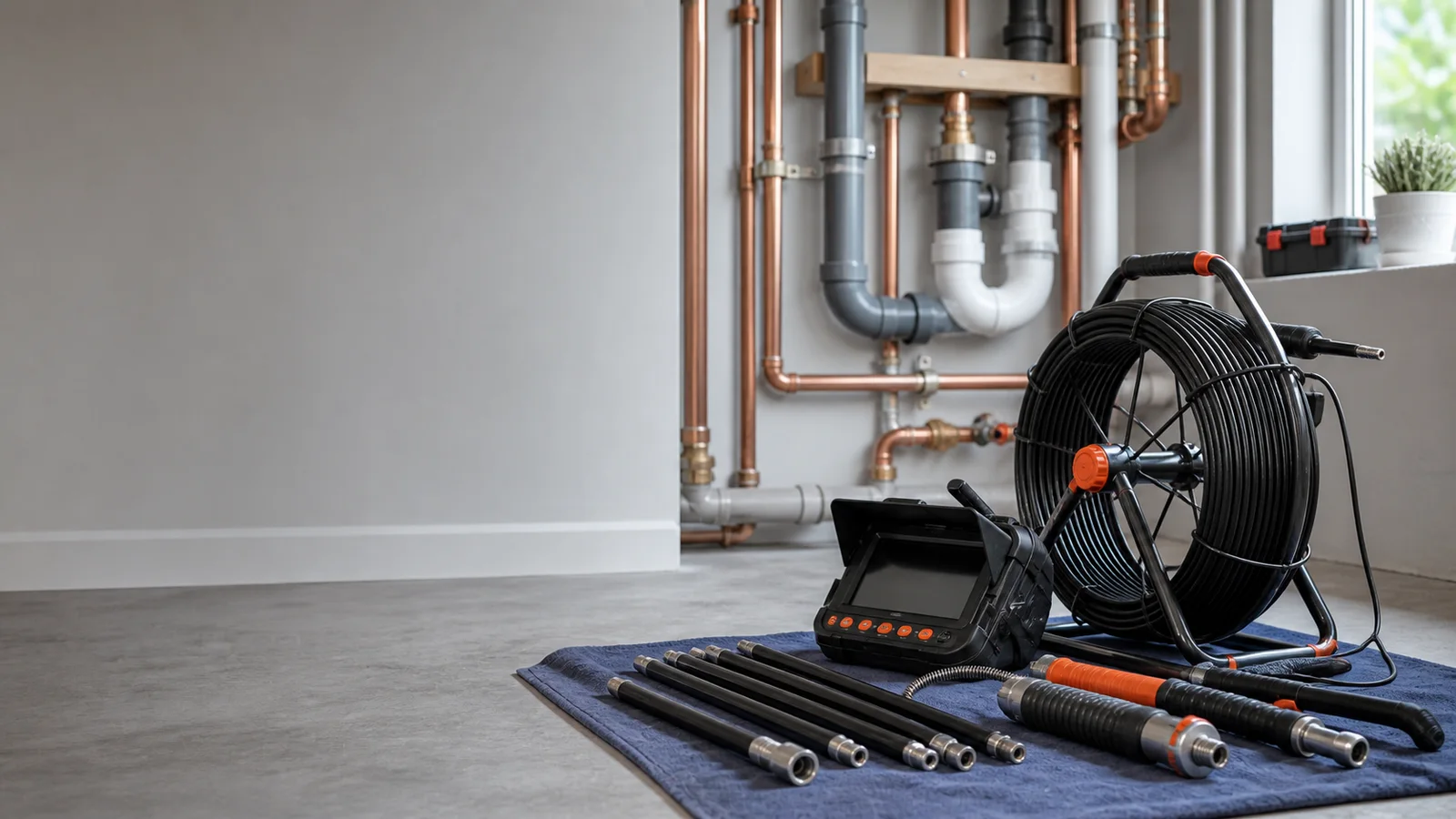
That's where a CCTV drain survey helps. A camera run through the pipe shows exactly what's happening inside. You get a clear picture before any further work is planned, rather than guessing.
If the survey finds a structural problem, drain repairs may be the real long-term fix. Repeat clearing won't solve a broken pipe, however well the equipment works.
How We Approach a Blocked Drain
We generally start with the least disruptive method that will actually solve the problem. For a straightforward blockage, that might be simple drain unblocking.
For anything recurring, greasy, or further down the line, we move to drain jetting. It clears the blockage and cleans the pipe in one visit. That means fewer repeat call-outs for the same problem, and less disruption for you overall.
Either way, we give you a fixed quote before any work starts. No surprises once the job is underway, and no pressure to pay for more than the drain actually needs.
A Quick Way to Decide
Not sure where to start? Ask three simple questions first.
- Has this drain blocked before, or is this the first time?
- Could the cause be fat, grease, or tree roots?
- How far is the blockage from your nearest access point?
A repeat problem, grease, or a long pipe run all point toward jetting. A one-off blockage close to the surface is often fine with rods.
The Bottom Line
Drain rods are fine for small, simple jobs. Jetting is the better choice for anything recurring, greasy, or further down the pipe.
Neither method is automatically "better" on its own. The right choice depends on your pipe, your blockage, and how often the problem has happened before.
If you're not sure which one you need, that's fine. Tell us what's happening and we'll recommend the right method for your drain, not just the cheapest one.
Request a quote online and we'll get back to you with next steps.
Where to get help
For a family home, domestic drain jetting is usually the lasting fix. Shops, cafés and offices often need commercial drain jetting instead. Our engineers travel to Tynemouth addresses and Cramlington sites as well as the city.
Burst pipe repair and leak detection across our coverage area
- Burst pipe repair in Newcastle upon Tyne
- Burst pipe repair in Gateshead
- Burst pipe repair in Sunderland
- Burst pipe repair in South Shields
- Burst pipe repair in North Shields
- Burst pipe repair in Whitley Bay
- Burst pipe repair in Tynemouth
- Burst pipe repair in Cramlington
- Burst pipe repair in Hexham
- Leak detection & repair in Newcastle upon Tyne
- Leak detection & repair in Gateshead
- Leak detection & repair in Sunderland
- Leak detection & repair in South Shields
- Leak detection & repair in North Shields
- Leak detection & repair in Whitley Bay
- Leak detection & repair in Tynemouth
- Leak detection & repair in Cramlington
- Leak detection & repair in Hexham